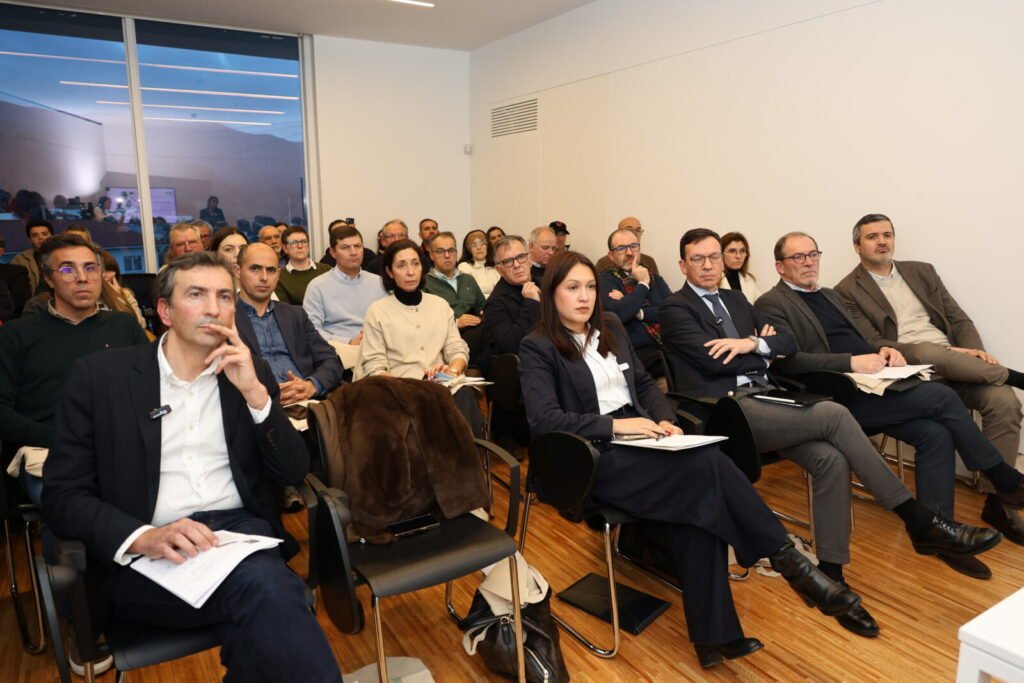

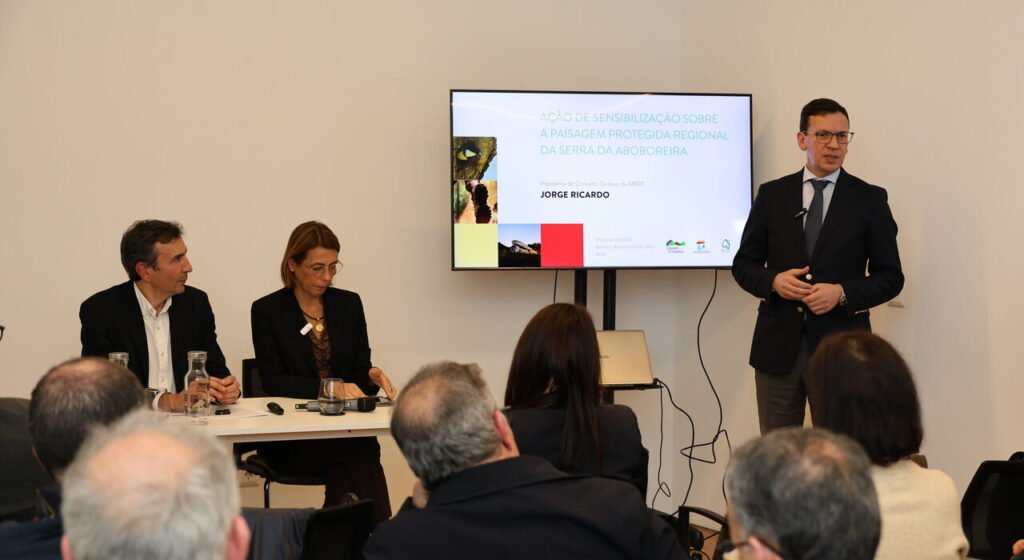
The auditorium of the António Mota Municipal Library was filled on Monday, 19 January, to attend the awareness-raising event dedicated to the Serra da Aboboreira Regional Protected Landscape, promoted by the Association of Municipalities of Douro and Tâmega (AMDT), in partnership with the Municipality of Baião.
The session was well attended by institutions, bringing together representatives from various entities linked to the territory, namely mayors, civil protection personnel, fire brigades, technicians, local agents and other stakeholders working in the areas of conservation, spatial planning, heritage and forest management, highlighting the interest and relevance of the topic for different sectors of the community.
The initiative aimed to inform the community about the protection regime for the Serra da Aboboreira, good practices associated with its use and the procedures to be adopted within the protected landscape, promoting a balance between enhancing the territory and environmental conservation.
The Mayor of Baião, Ana Raquel Azevedo, emphasised that, although the initiative was organised by AMDT, it was also promoted by the municipality, as it recognised the need to create a space for dialogue with the population. The mayor stressed the importance of promoting opportunities for clarification, stating that ‘it was essential to create a forum where people could ask questions, clarify doubts and better understand how this protected landscape works’.
The mayor also noted that the process is based on the proximity and continuous availability of the entities involved, emphasising that ‘the Baião Municipal Council is always available to clarify and work with everyone.’ In this regard, she stressed that ‘residents, landowners and local agents can, at any time, contact both the association of municipalities and the municipal councils that make up this protected area,’ adding that ‘the important thing is that all doubts are clarified and that everyone feels comfortable with this process.’
In the technical and institutional context, the regional director of the Institute for Nature Conservation and Forests (ICNF), Sandra Sarmento, placed the Serra da Aboboreira Regional Protected Landscape in the context of protected areas, noting that the territory is in an implementation phase, with the process of integration into the national network of protected areas underway. She stressed the importance of these outreach actions, stating that ‘this awareness-raising action is very relevant because it allows us to explain to landowners and local agents how the management of this protected area works, placing it within the functioning of protected areas at national level and the challenges and opportunities that this classification involves.’
Sandra Sarmento also mentioned that the classification of the protected area poses challenges and requires ongoing work, emphasising that the success of the process depends on the involvement of local communities. ‘Without the involvement of landowners and without this sense of belonging, it is very difficult to implement actions and respond to the challenges that a protected area of this nature poses,’ she said.
From a more operational perspective, the secretary-general of AMDT, Ricardo Magalhães, explained that the classification of Serra da Aboboreira is not intended to prevent activities, but rather to frame and monitor them in an informed manner. ‘This is not about prohibiting, but about informing and helping to understand how activities can be developed in Serra da Aboboreira, when an opinion or authorisation is required and what are the legal and regulatory procedures defined in the Management Regulations,’ he said. He urged people to consult the Serra da Aboboreira website, where they can find the form to request an opinion and authorisation (https://aboboreira.douroetamega.pt/autorizacoes-e-pareceres), which is a fundamental requirement for carrying out activities in the protected area.
Ricardo Magalhães also detailed the procedures associated with carrying out tourist, sporting and urban activities in the territory covered by the protected landscape, noting that, over the last year, around 40 opinions were issued, mostly favourable, after prior coordination and the introduction of adjustments. As an example, he pointed to the holding of motorised sporting events, explaining that ‘work is being done with the organising entities to mitigate the impacts on the territory’, namely through the definition of specific rules and the implementation of compensatory measures, such as the planting of native species.
The AMDT secretary-general also mentioned that a management plan for the Serra da Aboboreira Regional Protected Landscape is being prepared, emphasising the importance of involving landowners. ‘We cannot develop a management plan without listening to the landowners, so we are promoting actions in the territory to ensure that they play an active role in the construction of this plan,’ he added.
At the close of the session, the president of AMDT, Jorge Ricardo, highlighted the intermunicipal dimension of the process and the importance of consensus among all stakeholders. Recognising that this is a sensitive issue, he said he knew that ‘this is a delicate issue that affects everyone, and therefore only with closeness, openness and willingness to correct what is necessary can we fulfil the mission of protecting this heritage that belongs to everyone’.
He also stressed that the classification of the protected landscape has not prevented activities from taking place in the territory, advocating an approach based on correction and monitoring. ‘The ultimate goal is to protect, but with dialogue and participation, ensuring that this heritage continues to belong to everyone and be for everyone,’ he concluded.