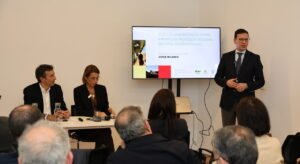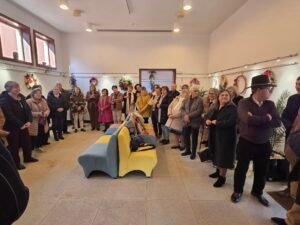

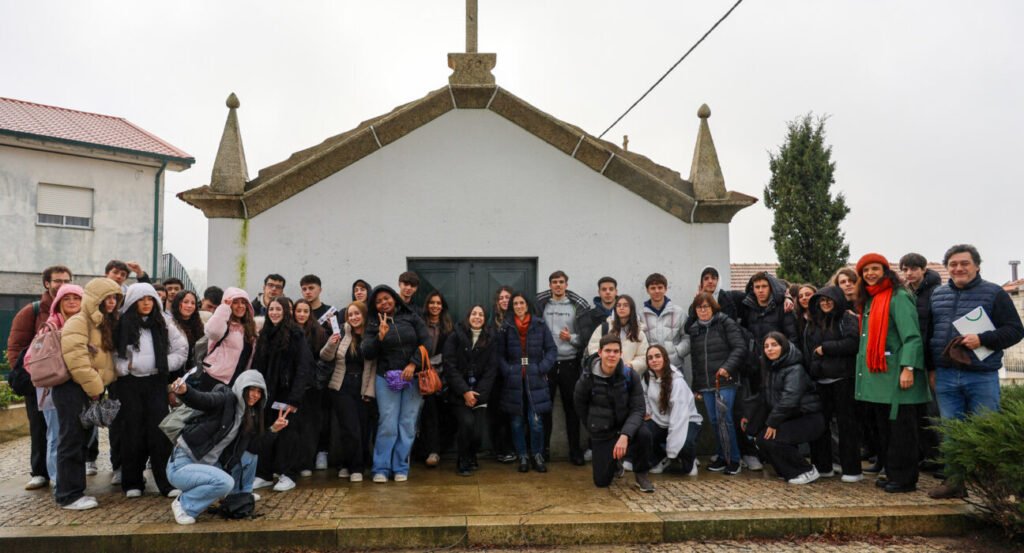
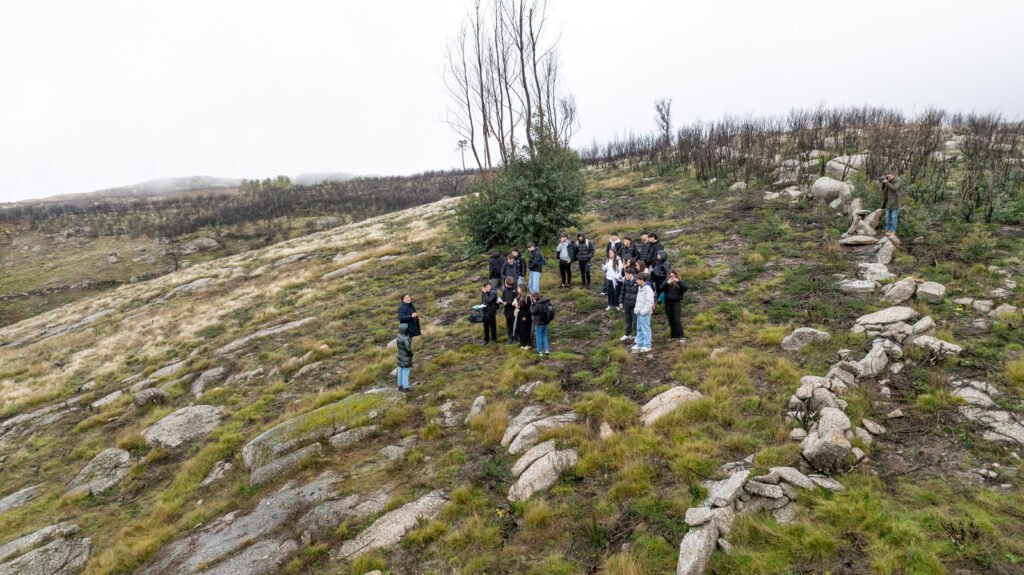
On the 14th, around 60 students from classes 11.º J and 11.º K at Penafiel Secondary School went on a field trip to the village of Almofrela as part of the PAISACTIVO cross-border project, with the aim of applying curriculum content and developing skills set out in the ‘Essential Learning’ programme.
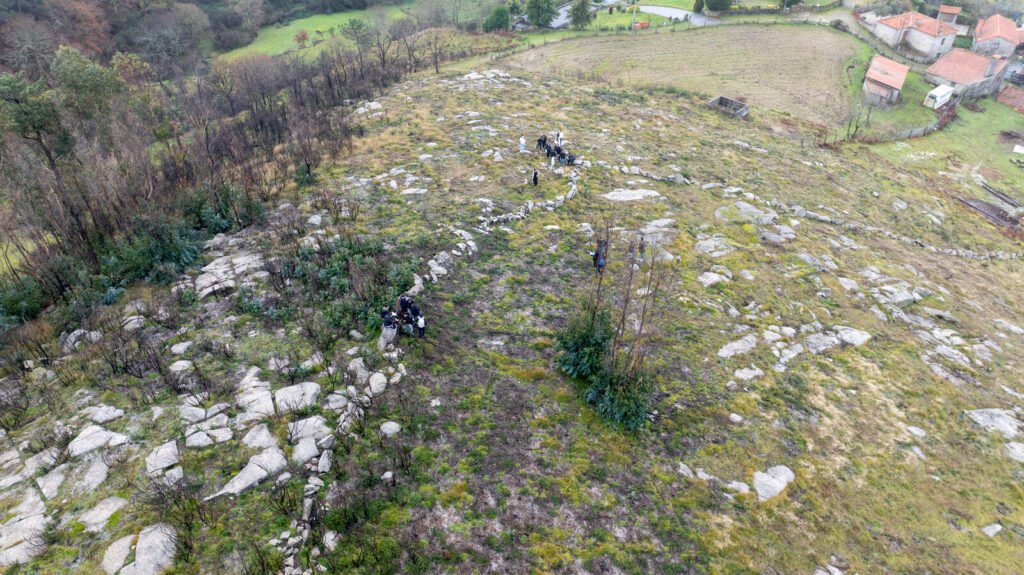
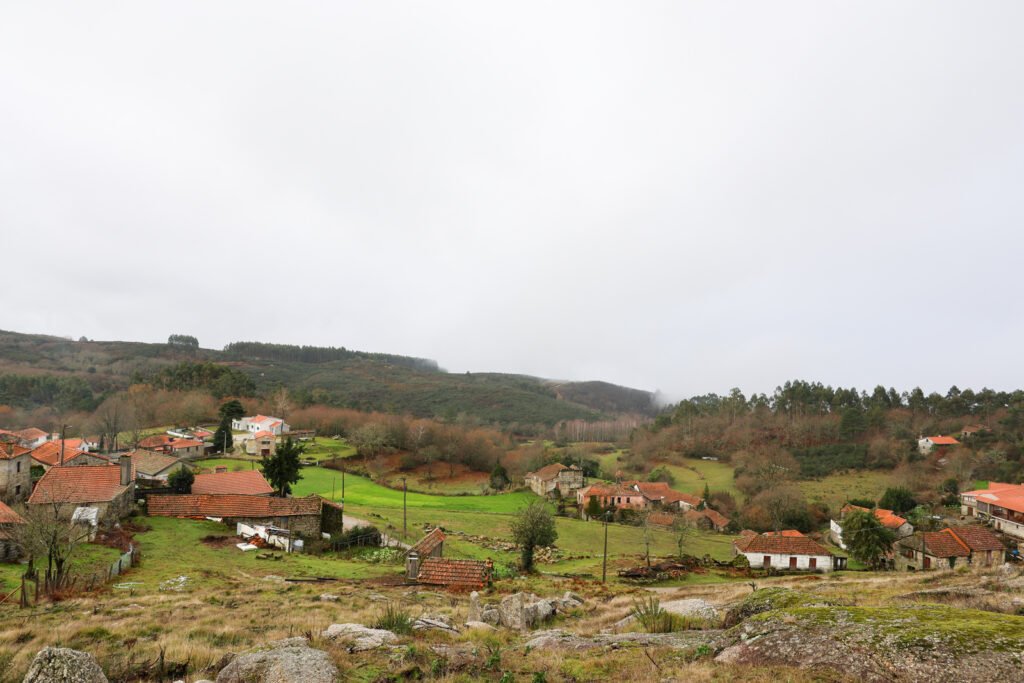
The initiative allowed students to observe the problems and potential of rural areas in the field, understand the transformations of human occupation, and analyse the relationship between natural resources, land use, and socio-economic dynamics.
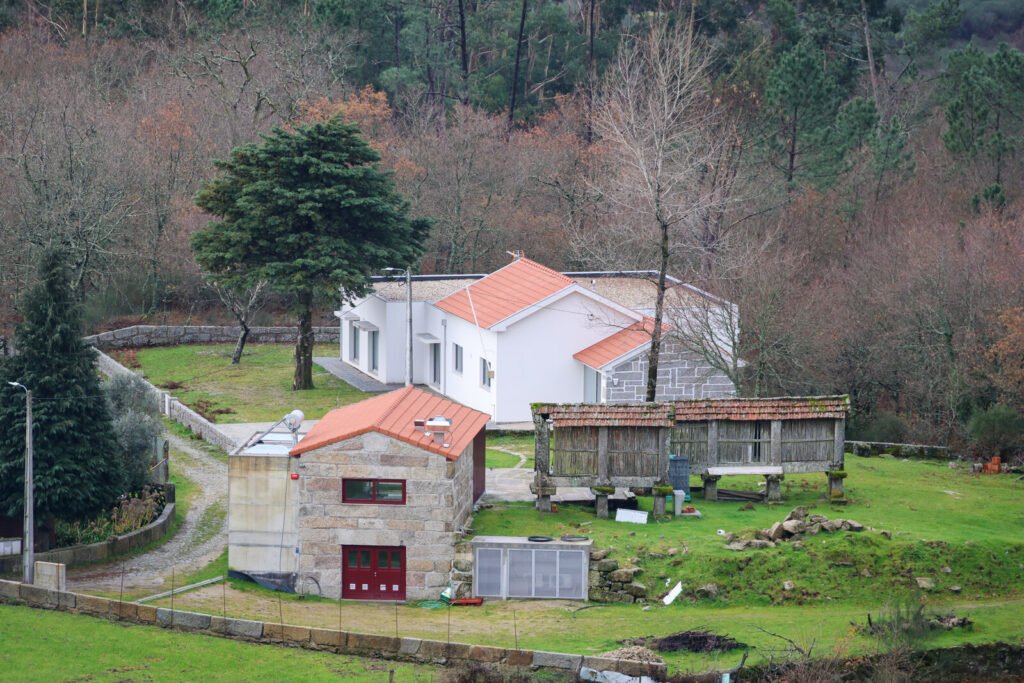
The highlight was the presentation of the ‘Village Academy’, housed in the former primary school in Almofrela, which functions as an educational space and living laboratory, promoting active landscape management, the enhancement of agroforestry and resilience to fires and climate change.
During the visit, the students applied geographical research methods, conducted surveys, interviews, sketches and cartographic analysis, consolidating essential skills for reading the landscape and critically interpreting the territory.
The activity strengthened the link between the school and the community, bringing students closer to local institutions and the Intermunicipal Community of Tâmega and Sousa.
The collection of photographs and direct observation allowed participants to develop their own view of Almofrela, identifying signs of abandonment, resilience and change.
This experience was a significant contribution to understanding rural areas in transformation and promoting meaningful learning, in line with contemporary sustainability challenges.
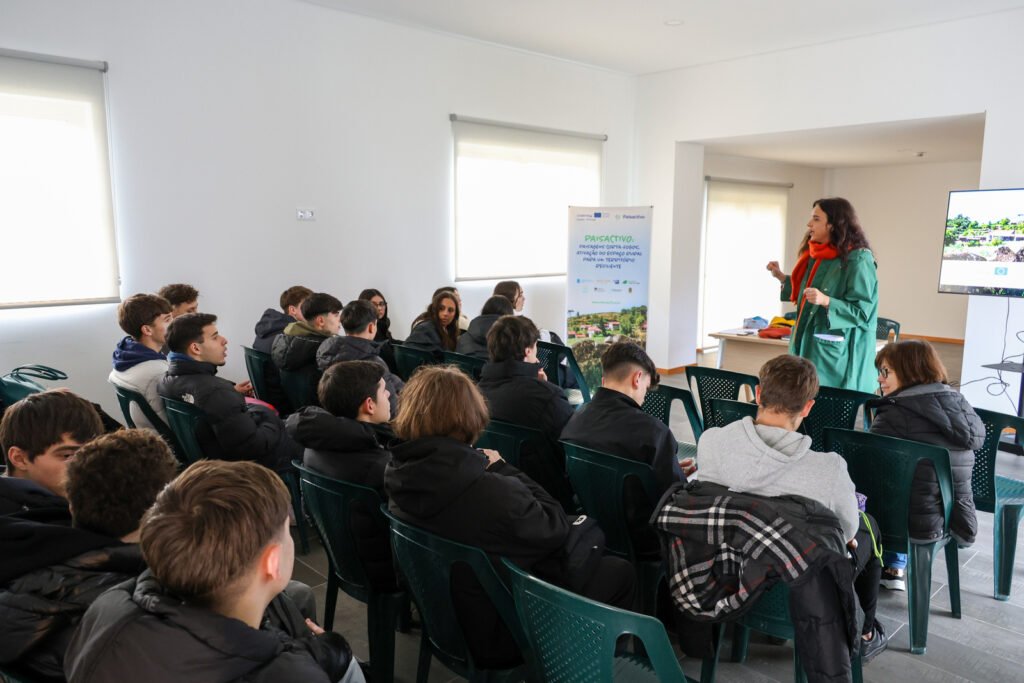
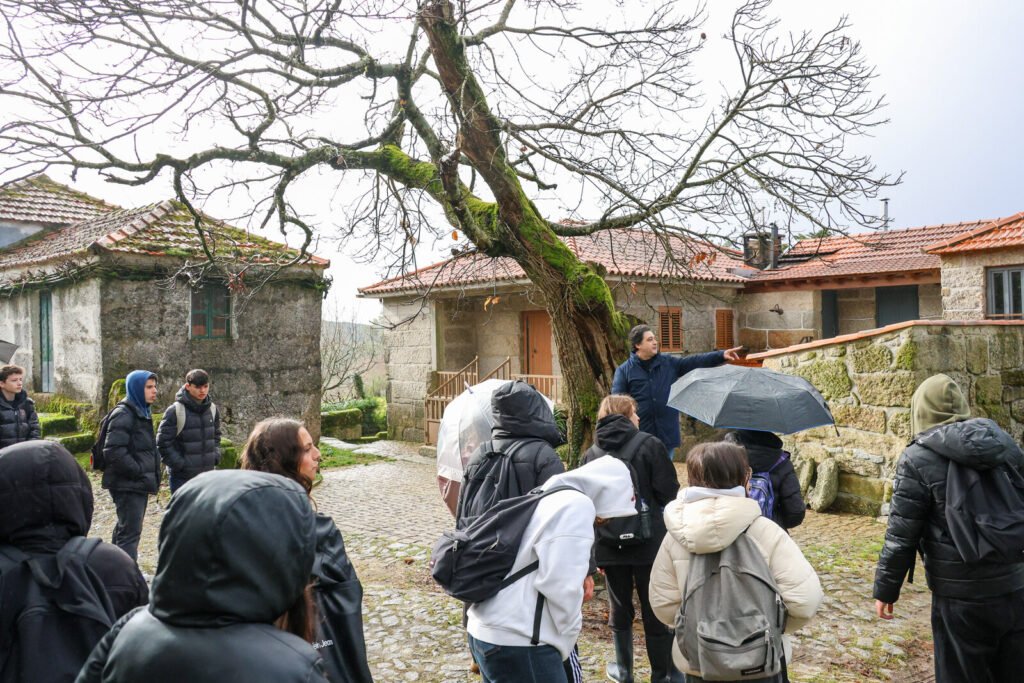
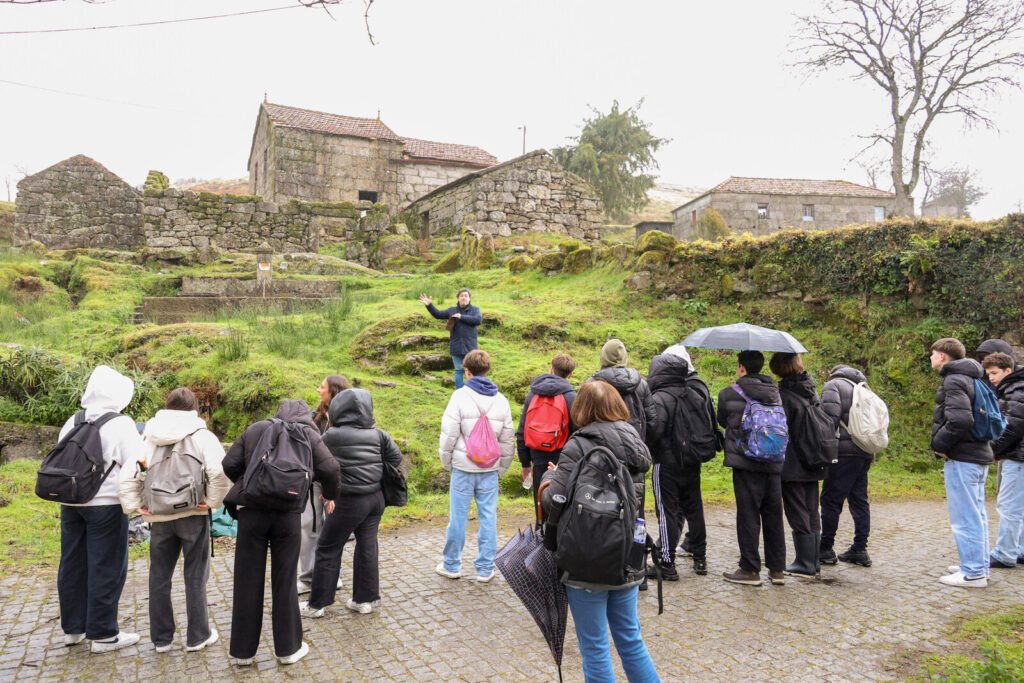
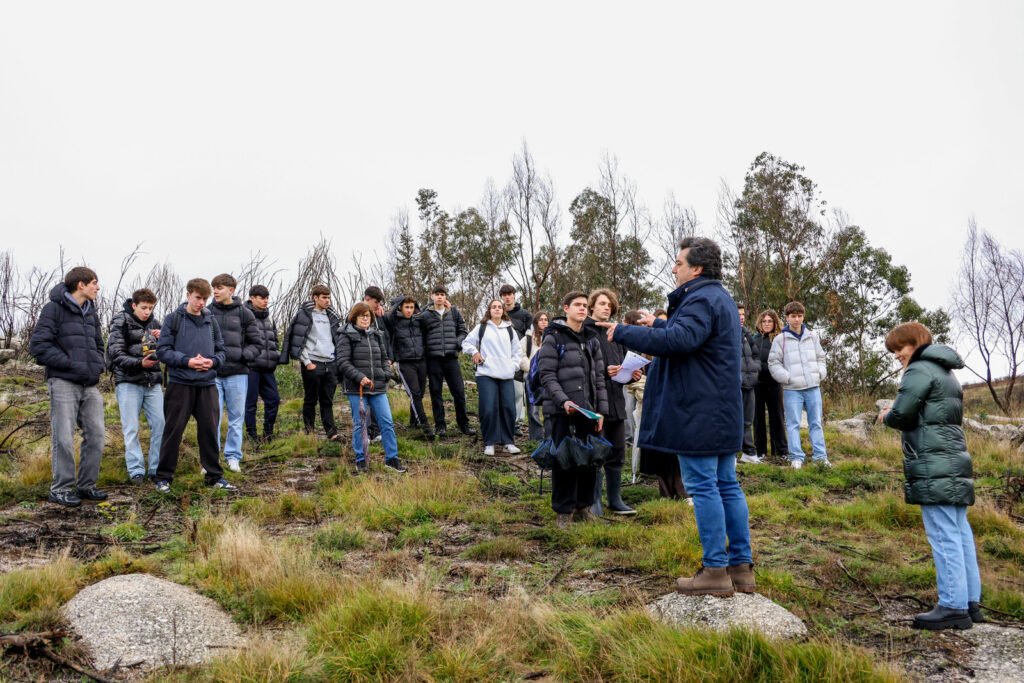
“VILLAGE ACADEMY” PROGRAMME
The “Village Academy” initiative, promoted by the Joana de la Vega Foundation, aims to build bridges between academia and the reality of rural communities.
This programme involves higher education students in concrete actions to boost the region, fostering interaction between the village and academia, with a view to creating sustainable and innovative projects for the future.
As part of this initiative, visits and collaborative activities have already been carried out with academic institutions, whose records highlight the practical and participatory nature of the project.
It is important to emphasise that this is a set of structured actions, and not just a concept or physical space.
Inspired by this approach, the Municipality of Baião is developing its own strand, currently known as ‘Community Revitalisation of the Village of Almofrela’, but which may adopt a more distinctive and institutional name that reflects the ambition and social impact of the initiative.
PAISACTIVO is a cross-border project co-financed by the Interreg Spain-Portugal programme – POCTEP (Spain-Portugal Cross-Border Cooperation Operational Programme) and brings together partner entities from Portugal and Spain, such as the Municipality of Baião, the Intermunicipal Community of Tâmega and Sousa, the University of Porto, the Directorate-General for Territory, the University of Santiago de Compostela, the Juana de Vega Foundation, the Municipality of Monterrei and AGADER – Galician Agency for Rural Development, the entity leading the project.